Lijiang · Dali · Northwest Yunnan

Where journeys slow down and stay slowed.

Cobbled lanes, courtyard inns, one improbable snow mountain — Lijiang and Dali reward the traveller who stops trying to see everything.

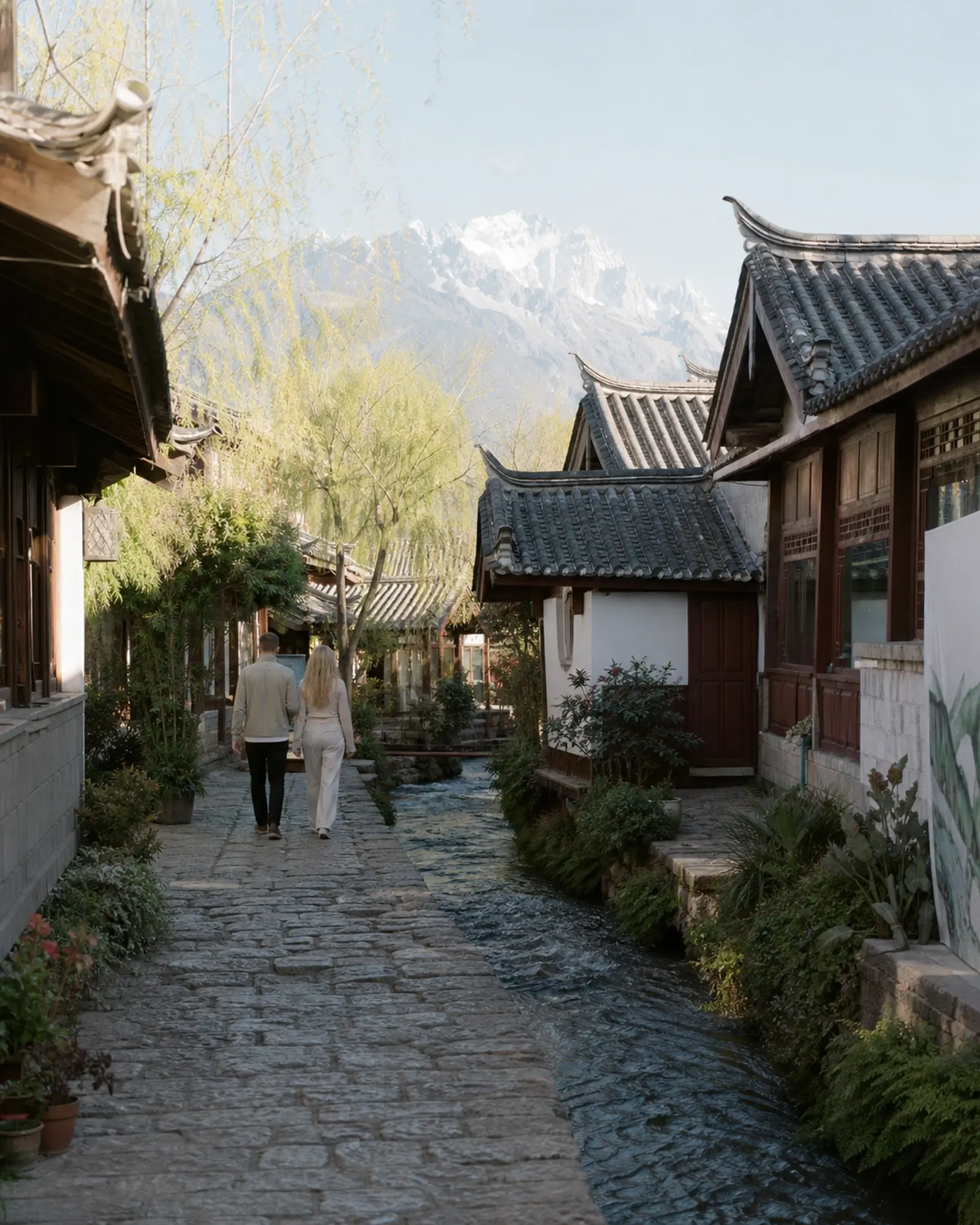
A couple walking a cobbled lane beside a stream in Lijiang old town, Jade Dragon Snow Mountain rising beyond the rooftopsConcept visual

When to go

Most of the year works here. That is rarer than it sounds.

Northwest Yunnan sits high and far south at once — mild winters, wet summers, and a mountain that decides daily whether to appear. Here is what each window actually gives you.

  • October – NovemberThe clear window

    The rains end and the air is rinsed clean — the best mountain visibility of the year, warm days, cold bright mornings. One caveat: 1–7 October is the National Day holiday, the busiest travel week in China. We plan around it; from mid-October the old towns exhale.

  • December – FebruaryWinter sun

    Nights drop below freezing in Lijiang, but the days are sunny, dry and nearly empty — the quietest the lanes ever get. Gulls winter on Erhai, and the snow mountain wears its full coat. Pack proper layers and the season repays them.

  • March – MaySpring, dry and bright

    The last clear months before the monsoon — blossom in the courtyards, snow still deep on the peaks, strong sun at altitude. A gentle, underrated window, and the one in which Dali is at its greenest without being wet.

  • June – AugustGreen season, honestly

    The monsoon months. Showers pass through most days, cloud often hides Jade Dragon entirely, and July–August school holidays fill Lijiang with domestic travellers. The hills are at their greenest and the light between storms is beautiful — but if the mountain matters to you, we will say plainly that these are not its months.

Lijiang, honestly

The old town has two lives. You want the first one.

At seven in the morning, Dayan old town is a UNESCO town going about its business — shutters opening, channels running loud, the mountain standing at the end of every lane. By eleven the coaches have arrived, the main streets are shoulder to shoulder, and the shops start repeating themselves. The answer is not to skip Lijiang. It is to sleep somewhere quieter and keep the town’s early hours for yourself.

  • Stay in Shuhe, ten minutes north — the same cobbles and waterways, a fraction of the foot traffic
  • Dayan before nine, while the lanes still belong to the people who live on them
  • Black Dragon Pool early, for the mountain doubled in still water
  • Baisha village for the Ming-era frescoes and an old town the coaches never adopted
  • Midday spent elsewhere entirely — the mountain, the courtyard, a long Naxi lunch
  • Evenings back in Shuhe; Dayan’s bar street is honest about being loud
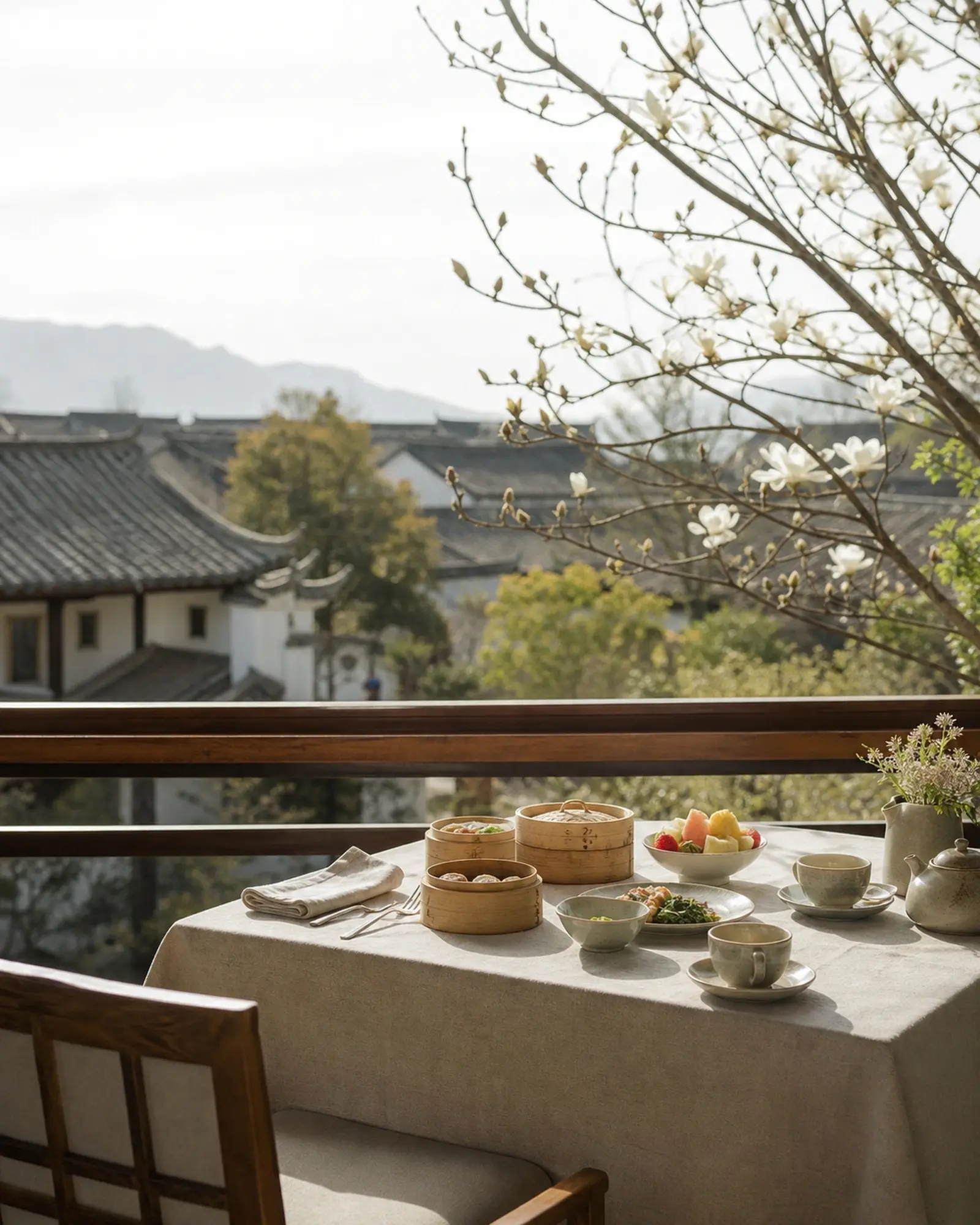
Breakfast of bamboo steamers and tea set on a balcony table above grey-tiled rooftops, magnolia branches in bloomConcept visual

Courtyard mornings

Breakfast is an event with no schedule.

The inns we hold here are small and courtyard-built — a table on the gallery, steamers and good tea, rooftops and the mountain beyond the rail. Nothing on the plan until you say so. Days like these are why Yunnan anchors so many of ourhoneymoon journeys; they work just as well for anyone whose favourite sight is a slow morning.

Dali · Erhai

A lake you take at cycling pace.

Two hours south by rail, Dali sits lower and looser — Bai villages strung between the Cangshan range and forty kilometres of freshwater. The right day here has almost nothing on it, deliberately.

  • The lakeside corridor path by bicycle or on foot, village to village along the west shore
  • Xizhou in the morning — Bai courtyard mansions, the market, a baba flatbread straight off the griddle
  • The photo stations — white tables, hired jeeps — run on queues; we ride past them
  • Shuanglang has been rebuilt for the crowds; we will say so, and find you quieter shoreline
  • Cangshan by chairlift, for the lake laid out silver below
  • Dinner in Dali old town after the day-trippers have gone

Altitude, honestly

You will feel the stairs before you feel the height.

Yunnan’s altitude is real but gentle, and the route climbs in the right order — low first, high later, the highest point optional.

  • DaliAbout 1,900 m

    Lower than Lijiang and noticeably softer — most visitors feel nothing at all. If anyone in your party is cautious about altitude, we simply start the journey here.

  • LijiangAbout 2,400 m

    A shorter breath on the stairs for the first day, strong sun, little else. Sleeping a night or two here is also the natural acclimatisation for anything higher.

  • Jade Dragon Snow MountainCableway to 4,506 m

    An hour or two among glaciers, not a stay — cableway up, oxygen carried, pace kept slow, and the whole excursion left out entirely if you would rather admire the mountain from a courtyard chair. Plenty do.

  • Shangri-LaAbout 3,300 m

    The one real jump, and the honest trade of the whole region. For it: Tiger Leaping Gorge on the road north, and Songzanlin monastery — a Tibetan world the old towns only hint at. Against it: two extra days minimum, thinner air, cold winters, and a town centre rebuilt after a 2014 fire. On a five-day journey we would rather give those days to the lake; from about seven, the extension earns itself.

The honest part: anyone with a heart or lung condition, or travelling while pregnant, should talk to a doctor before the high points — and tell us, so the route is shaped low from the start. The best of Yunnan happens below 2,500 metres anyway.

Sample shape · 4–5 days

Two old towns, one mountain, no hurry.

One way a Lijiang and Dali itinerary can fall — written out so you can see the pace, not a package to buy off a shelf.

Lijiang · Dali · Erhai4–5 days

The trick is to move once, and slowly. Lijiang takes the mornings and the mountain; Dali takes the lake and the appetite. Nothing on this shape starts before you have had breakfast.

  • Day 1 — Fly into Lijiang and settle in Shuhe. An evening walk on the cobbles, dinner in the courtyard, an early night at 2,400 metres.
  • Day 2 — Dayan old town at first light, before the coaches. Then Jade Dragon Snow Mountain — cableway up, oxygen carried — or a slow afternoon in Baisha instead.
  • Day 3 — The morning train south to Dali, about two hours. Afternoon in Xizhou: courtyard mansions, the market, tea on a Bai gallery.
  • Day 4 — Erhai at cycling pace along the west-shore corridor, Cangshan by chairlift if legs allow, dinner in the old town once the day-trippers have gone.
  • Day 5 — Depart from Dali — or turn north for the two-day Shangri-La extension, or take the short onward flight to Guilin and the Li River.

Private guide & driver · courtyard stays · intercity rail · entrance tickets held

This is a shape, not a package — there is no fixed itinerary to buy. Four days trims the mountain; seven adds Shangri-La; your version starts from your dates, your party, and how slow you would like the days.

Operated by 成都光大国际旅行社 — licensed since 1987Travel licence L-SC-CJ00008See the paperwork →

Good to know

Questions we hear often.

Lijiang or Dali — which deserves more nights?

On a short trip, split them almost evenly and let temperament decide the tilt. Lijiang has the drama — the snow mountain, the prettier lanes, and, at midday, the bigger crowds; we base you in Shuhe to keep the good hours and skip the worst ones. Dali is looser: lower, warmer, built around a lake rather than a stage set, and the better place to do very little. Couples who want quiet usually end up giving Dali the extra night. Naxi culture and mountain scenery pull the other way.

What about altitude in Yunnan?

Gentler than it sounds. Dali sits near 1,900 metres and Lijiang near 2,400 — at both, most people notice nothing beyond a shorter breath on stairs. The one high moment is optional: the Jade Dragon cableway reaches 4,506 metres for an hour or two, oxygen carried, pace slow, and it can be left out with no loss of face. Shangri-La, at roughly 3,300 metres, is the only real jump, which is one reason we treat it as an extension rather than a default. Anyone with a heart or lung condition should talk to a doctor first — and tell us.

Is Shangri-La worth the extension?

With two extra days and the right expectations, yes. The drive north passes Tiger Leaping Gorge, and Songzanlin — the great Tibetan monastery above the town — is a genuinely different world from the old towns below. Against that: the altitude jump to about 3,300 metres, winters that turn properly cold, and a town centre that was rebuilt after a 2014 fire. On a five-day trip we would rather give those days to the lake; from about seven days, the extension starts to earn itself.

When is the best season?

Most of the year works, which is rare in China. October to November is the clearest window — the rains have rinsed the air and the snow mountain shows itself daily — avoiding 1–7 October, the National Day holiday. Winter brings cold nights but sunny, empty days; spring is dry and bright with blossom in the courtyards. June to August is the green season: showers most days, cloud often hiding the mountain, and July–August school holidays filling Lijiang. It still works — we will just say so plainly before you book it.

Your brief

Tell us your dates and your pace.

Who is travelling, when, and how slow you would like the days — three lines is plenty to start.

No payment, no obligation at this stage. Your details stay between us — see our privacy note.

Start the conversation

Yunnan won’t hurry.
The small courtyards still fill.

No pitch, no pressure — just a considered first reply from someone who plans China for a living.

Replies in English · Usually within a few hours, always within 24