China · family travel · private planning

A China family vacation
with room for everyone.

The Great Wall, a panda morning and enough breathing room for children, grandparents and curious adults to enjoy the same journey.

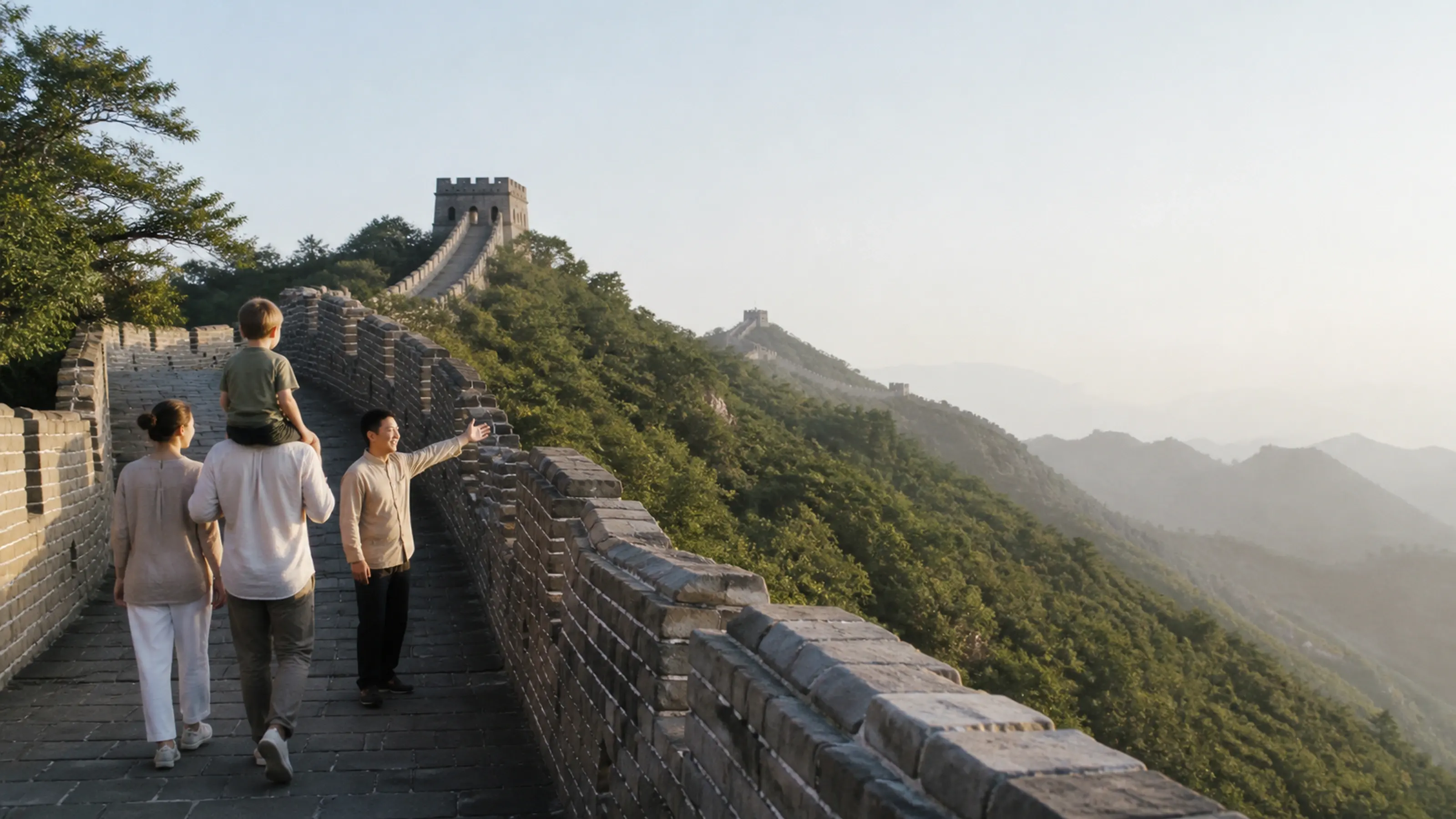
Concept image of a family walking on the Great Wall near BeijingConcept visual
  • People firstAges, interests and walking comfort
  • 2 basesA useful starting point for ten days
  • Real restSpace after the longest journeys
  • Private planDefined in your written itinerary

Start with the rhythm

Build around ages and energy, then choose the cities.

A useful China family vacation plan begins with the people travelling. Beijing brings imperial history and the Great Wall. Chengdu gives the trip a panda visit and slower city days. Connecting the two creates contrast without needing a new stop every other day. A third region makes sense when it earns the time spent getting there.

These are suggested route shapes, not accounts of completed guest trips. Every length below includes arrival and departure. Your flight times, children’s ages, preferred activities and comfortable walking time decide how much fits. Private travel can make transfers and decisions simpler, but it does not remove queues, distances or the need to rest.

Suggested route

Three honest route shapes

7 days · Start with one regionA shorter first visit

A single Beijing or Chengdu base is the easiest starting point when seven days include international travel. Beijing and Chengdu together would be compact, with a dedicated intercity day and little spare time. Discuss that version only if both the Wall and pandas are essential and the transport works.

10 days · Beijing and ChengduTwo bases, a clearer rhythm

The detailed ten-day guide counts arrival on Day 1, the Beijing–Chengdu move on Day 5 and departure on Day 10. The remaining time includes a focused palace visit, a full Wall day, a panda morning and lighter city days. Keep the final Chengdu day genuinely flexible.

14 days · Consider a third regionAdd landscape with space

With two weeks, discuss adding Guilin and Yangshuo or another region that fits your actual transport. Allocate its arrival and departure movement before adding attractions. Older children may enjoy wider variety; younger children or grandparents may still prefer extending the two-base route with more rest.

Ages and expectations

Give each traveller a reason to enjoy the day.

For younger children, choose short visits with a clear ending, familiar meal options and predictable rest. With older children, ask for one theme they genuinely like: wildlife, food, history, design or everyday life. A hands-on activity can be requested, with the provider, age requirements, language and availability confirmed before inclusion.

For a multigenerational family, start with the person who needs the most support. Describe how long they comfortably walk and whether steps or vehicle boarding are difficult. Private transport helps between places but does not turn historic sites into step-free routes. If the group splits, supervision, meeting points and any extra staffing must be agreed.

Meals and allergies

Confirm requests with the people preparing the food.

Tell us the exact foods to avoid and how strictly. We can request written confirmation from selected restaurants or activity suppliers and discuss a translated allergy card. Suppliers must confirm what they can accommodate; a private guide, translation or menu description does not guarantee an allergen-free meal or kitchen.

Keep familiar choices alongside new flavours and avoid stacking a long transfer immediately before a meal the children may not enjoy. Make any necessary alternatives part of the written brief. The goal is a workable dining plan with clear limits, not an assumption that every kitchen can meet every request.

Transfers and rest

Count the whole travel day.

Compare air or rail by the full door-to-door journey, including packing, access to the station or airport, identity checks, waiting and onward transfer. Some long-distance journeys use most of the day even when the timetable looks manageable. Avoid a timed major attraction after that arrival.

Protect a real rest period after a demanding outing. A rushed lunch between two attractions is not the same as an open afternoon. One main experience per day is a useful planning rule, with smaller walks added only if the family wants them. Ask about vehicle space, luggage and appropriate child restraints while transport is being arranged.

Reservations and animal viewing

Use current official information.

The Palace Museum booking page and Panda Base ticket information are the starting points for date-specific access. Do not promise children a particular entry time before the reservation is secured.

The Panda Base visitor guidance explains that weather and animal care affect viewing. A panda visit does not guarantee a particular animal or behaviour. Sources checked 26 September 2026; the relevant notices should be checked again for your dates.

Your first brief

A few useful details are enough to start.

Send the children’s ages, travel dates, arrival and departure cities, walking comfort, dietary needs and the one thing each person hopes to experience. Passport nationality is relevant to entry planning, but visa eligibility needs its own check; a family itinerary alone does not establish permission to enter.

For example: “Two adults, children aged six and ten, ten days in October, pandas and the Great Wall, with one grandparent who avoids stairs.” Use the trip enquiry page or the brief below. We can then discuss which city combination fits before committing to detailed arrangements.

Operated by Chengdu Everbright International Travel Service Co., Ltd. · 1987Travel licence L-SC-CJ00008About the brand and licence →

Read next

Keep shaping the family trip.

Good to know

Questions we hear often.

What is a practical first China itinerary for a family?

Beijing and Chengdu are a useful two-base starting point for ten days including arrival and departure. They combine the Great Wall, history and pandas. A third region needs additional transfer time and may be better suited to a longer trip.

How many days should a family spend in China?

Seven days suits one region most comfortably. Ten days can support a two-base route with lighter days. Two weeks gives room to discuss a third region or a slower version of the same trip. Actual flight times remain important.

Can you accommodate food allergies and grandparents?

We can discuss mobility needs and request dietary confirmation from selected suppliers. Restaurants must confirm their own capabilities, and allergy-free preparation cannot be guaranteed. Walking, steps, transport and rest are reviewed for the proposed route.

Are these real family trip case studies?

No. These are suggested planning routes. Confirmed guest stories require the travellers’ permission and are distinct from these examples.

Your brief

Tell us who is travelling.

Share ages, dates, walking comfort and the places already on your list. We will discuss a route shape before filling in the details.

Share your group size and travel month for a free first route idea. No payment or booking commitment.

A real person replies within 24 hours. We agree the timing of a detailed proposal after discussing your needs.

No payment, no obligation at this stage. Your details stay between us — see our privacy note.

Start the conversation

Start with the people.
Shape the journey around them.

Explore a first route with a local planner before deciding on your trip.

Share your group size and travel month for a free first route idea. No payment or booking commitment.

Replies in English · A real person replies within 24 hours. We agree the timing of a detailed proposal after discussing your needs.